

Introduction to Amazon FBA Taxes in the USA
Selling products through Amazon FBA taxes USA involves more than managing inventory and shipping. Every seller operating in the United States must understand the tax responsibilities connected to online commerce. Many new sellers believe Amazon handles all taxes automatically, but the reality is more complex. While the platform collects certain taxes under marketplace laws, sellers still have reporting and compliance obligations.
Understanding Amazon FBA tax rules is essential for protecting your business and avoiding penalties. Taxes for Amazon businesses generally fall into two main categories: sales tax collected from customers and income tax based on profits. Sellers must also track expenses, monitor thresholds, and maintain accurate records.
Why Taxes Matter for Amazon FBA Sellers
Online businesses operate across multiple states, which means tax obligations can change depending on where customers are located. Many sellers face confusion when dealing with Amazon seller sales tax and federal reporting requirements.
Common reasons sellers struggle with taxes include:
• Multi state sales and varying tax rates
• Inventory stored in multiple Amazon warehouses
• Different filing rules across states
• Difficulty tracking expenses and deductions
Key Taxes Amazon Sellers Must Understand
Below is a simple comparison of the two major tax categories.
| Tax Type | What It Covers | Who Handles It |
|---|---|---|
| Sales Tax | Collected from customers on eligible orders | Often collected by Amazon under marketplace facilitator laws |
| Income Tax | Tax on business profits | Seller must report to IRS |
Understanding Amazon seller income tax alongside sales tax responsibilities helps sellers maintain compliance while planning long term growth. Proper tax management ensures that an Amazon business remains profitable and legally secure in the competitive U.S. marketplace.
Do Amazon FBA Sellers Have to Pay Taxes?

Operating an Amazon business in the United States means sellers must understand their responsibilities under Amazon FBA taxes USA regulations. Many beginners assume that Amazon manages all tax obligations automatically, but sellers still have several legal duties. While the platform collects certain sales taxes, sellers remain responsible for reporting income, maintaining records, and complying with federal and state regulations.
Understanding Amazon FBA tax rules is essential for avoiding penalties and ensuring your business stays compliant. The U.S. tax system treats Amazon sellers as independent businesses. This means profits earned from sales are considered taxable income and must be reported to the Internal Revenue Service.
Sales Tax vs Income Tax Responsibilities
There is often confusion between Amazon seller sales tax and income tax. These two taxes serve different purposes and are handled in different ways.
| Tax Responsibility | Who Collects It | Who Reports It |
|---|---|---|
| Sales Tax | Often collected by Amazon through marketplace systems | Seller may still need to register or file returns |
| Income Tax | Not collected by Amazon | Seller reports profits to the IRS |
Under marketplace facilitator laws, Amazon automatically collects sales tax in most states when customers make purchases. However, sellers must still monitor their activities in different states because certain situations may create a sales tax nexus Amazon obligation.
Situations Where Sellers Still Handle Taxes
Even when Amazon collects taxes, sellers may still need to manage several tasks:
• Register for sales tax permits in states where nexus exists
• File periodic sales tax returns even if Amazon collected the tax
• Track revenue and profits for Amazon seller income tax reporting
• Maintain records for 1099-K Amazon sellers reporting requirements
These responsibilities make it important for sellers to use accounting tools, tracking systems, or an Amazon tax calculator to ensure accurate reporting and smooth tax compliance.
Types of Taxes Amazon FBA Sellers Must Understand
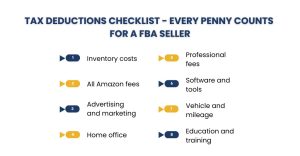
Running a successful Amazon business requires a clear understanding of the taxes that apply to online sellers in the United States. The framework of Amazon FBA taxes USA includes multiple tax categories that impact how sellers collect, report, and pay taxes. Ignoring these obligations can result in penalties, audits, or financial mismanagement.
The three main taxes that Amazon sellers encounter are sales tax, use tax, and income tax. Each tax applies in different situations depending on where the sale occurs, how the product is delivered, and how much profit the business generates. Understanding these components helps sellers follow proper Amazon FBA tax rules while maintaining accurate financial records.
Comparison of Major Taxes for Amazon Sellers
| Tax Type | Purpose | Who Pays |
|---|---|---|
| Sales Tax | Charged on customer purchases | Customers pay, sellers collect or Amazon collects |
| Use Tax | Applies when sales tax was not collected | Seller may owe tax to the state |
| Income Tax | Based on net profit from sales | Seller pays federal and possibly state tax |
Sales Tax
Amazon seller sales tax applies when customers purchase taxable products. In most states, Amazon collects this tax automatically under marketplace facilitator laws. However, sellers must still determine whether they have a sales tax nexus Amazon presence in certain states and may need to register or file reports.
Use Tax
Use tax applies when products are sold without collecting sales tax in a state where tax should have been applied. This can happen if sellers ship products to customers in states where they have tax obligations but did not collect tax during the transaction.
Income Tax
Every Amazon seller must report profits through Amazon seller income tax filings. The IRS treats Amazon sellers as business owners, meaning net income must be reported annually. This is where proper accounting and tracking FBA tax deductions becomes essential.
Common deductible expenses include:
• Amazon referral fees
• Fulfillment and storage costs
• Advertising expenses
• Shipping and packaging
Many sellers rely on an Amazon tax calculator and accounting tools to estimate profits and prepare tax reports accurately.
How Marketplace Facilitator Laws Affect Amazon Sellers
One of the most important developments affecting Amazon FBA taxes USA is the introduction of marketplace facilitator laws. These regulations were created to simplify tax collection for online marketplaces and ensure that states receive proper sales tax revenue from e commerce transactions.
Under marketplace facilitator laws, online platforms like Amazon are responsible for collecting and remitting sales tax on behalf of third party sellers in most U.S. states. This means that when a customer purchases a product, Amazon automatically calculates the correct tax rate and sends the tax payment directly to the state government.
While this system reduces administrative work for sellers, it does not completely remove their responsibilities under Amazon FBA tax rules.
How Marketplace Facilitator Laws Work
These laws shift the responsibility of collecting Amazon seller sales tax from the individual seller to the marketplace platform. Amazon acts as the tax collector for eligible transactions.
Key functions performed by Amazon include:
• Calculating the correct tax rate for each state
• Collecting sales tax during checkout
• Sending tax payments to state tax authorities
• Maintaining transaction records for compliance
However, sellers must still monitor whether their business activities create a sales tax nexus Amazon obligation in certain states.
Comparison of Responsibilities
| Task | Amazon Responsibility | Seller Responsibility |
|---|---|---|
| Sales tax collection | Handled by Amazon | Not required in most states |
| Sales tax filing | Often handled by Amazon | May still file informational returns |
| Income tax reporting | Not handled by Amazon | Seller reports profits |
Even when Amazon collects taxes, sellers must track profits for Amazon seller income tax reporting. They must also review their 1099-K Amazon sellers documents each year to ensure the reported revenue matches their accounting records.
To simplify compliance, many businesses use accounting tools or an Amazon tax calculator to estimate taxes and identify eligible FBA tax deductions. Proper planning ensures sellers stay compliant while focusing on growing their Amazon business.
Understanding Sales Tax Nexus for Amazon FBA
One of the most important concepts in Amazon FBA taxes USA is sales tax nexus. Nexus determines whether a seller has a sufficient business presence in a state that requires them to collect or report sales tax. Understanding this concept is essential because many Amazon sellers operate in multiple states through the Fulfillment by Amazon network.
The concept of sales tax nexus Amazon became even more important after states began enforcing stronger e commerce tax regulations. Sellers must monitor both physical presence and revenue thresholds to determine whether they have tax obligations in specific states.
Physical Nexus
Physical nexus occurs when a business has a tangible presence in a state. For Amazon sellers, this often happens when inventory is stored in Amazon warehouses. Since Amazon distributes inventory across fulfillment centers nationwide, sellers may unknowingly create nexus in several states.
Examples of physical nexus include:
• Inventory stored in Amazon fulfillment centers
• Offices or employees located in a state
• Warehouses used for product storage
• Business property within a state
When physical nexus exists, sellers may need to register for Amazon seller sales tax permits depending on local rules.
Economic Nexus
Economic nexus is based on sales activity rather than physical presence. States set thresholds that determine when sellers must comply with Amazon FBA tax rules.
Typical economic nexus thresholds include:
• 100000 dollars in annual sales in a state
• 200 transactions with customers in that state
Comparison of Nexus Types
| Nexus Type | Trigger | Impact on Sellers |
|---|---|---|
| Physical Nexus | Inventory or business presence | May require tax registration |
| Economic Nexus | Sales or transaction thresholds | May require reporting obligations |
Even when Amazon collects tax under marketplace facilitator laws, sellers must track sales carefully. Proper accounting helps with Amazon seller income tax reporting and supports accurate records for 1099-K Amazon sellers.
Many businesses rely on an Amazon tax calculator and accounting systems to monitor nexus exposure while maximizing eligible FBA tax deductions.
States With No Sales Tax (NOMAD States)
When managing Amazon FBA taxes USA, sellers must understand that not every state applies sales tax to retail transactions. A small group of states known as NOMAD states does not charge statewide sales tax. The term NOMAD represents the first letters of these states: New Hampshire, Oregon, Montana, Alaska, and Delaware.
For Amazon sellers, this can simplify part of the tax process because customers located in these states are not charged traditional Amazon seller sales tax. However, this does not eliminate all tax responsibilities. Sellers must still follow Amazon FBA tax rules related to income reporting, inventory tracking, and potential local tax requirements.
The Five NOMAD States
Below is a comparison of states that do not charge statewide sales tax.
| State | Sales Tax Status | Additional Notes |
|---|---|---|
| New Hampshire | No statewide sales tax | Business taxes may still apply |
| Oregon | No statewide sales tax | Local taxes may exist |
| Montana | No statewide sales tax | Certain resort areas apply local taxes |
| Alaska | No statewide sales tax | Some local municipalities charge sales tax |
| Delaware | No statewide sales tax | Businesses may face gross receipts taxes |
Even though these states do not impose sales tax, sellers should still monitor whether their inventory or business activities create sales tax nexus Amazon obligations in other states.
Why NOMAD States Still Matter for Amazon Sellers
Operating in NOMAD states can affect tax strategy and pricing decisions. However, sellers must still manage several important tasks:
• Track revenue for Amazon seller income tax reporting
• Maintain accurate records for 1099-K Amazon sellers
• Monitor inventory stored in fulfillment centers
• Identify eligible FBA tax deductions to reduce taxable profit
Many sellers use financial tools or an Amazon tax calculator to estimate overall tax obligations across different states. Even when no sales tax applies in a specific state, maintaining accurate accounting remains essential for compliance and long term profitability.
When Amazon FBA Sellers Must Register for Sales Tax
Understanding when to register for tax permits is a key part of managing Amazon FBA taxes USA. Even though Amazon collects taxes in most states under marketplace rules, sellers may still need to register with certain state tax authorities. Registration allows businesses to report sales activity, maintain compliance, and avoid penalties.
Following proper Amazon FBA tax rules begins with identifying the states where your business has tax obligations. These obligations are usually created through physical inventory storage or economic sales thresholds.
Situations That Require Sales Tax Registration
Sellers typically need to register for Amazon seller sales tax permits when their business meets nexus requirements. The most common trigger is a sales tax nexus Amazon presence in a specific state.
Common situations that require registration include:
• Inventory stored in an Amazon fulfillment center
• Sales exceeding economic nexus thresholds
• Business operations or employees located in a state
• Warehousing or product storage in multiple states
Even when Amazon collects taxes under marketplace facilitator laws, some states still require sellers to register and submit informational reports.
Step by Step Registration Process
Registering for a sales tax permit is usually completed through the state tax authority website. The process typically includes the following steps.
-
Identify states where nexus exists
-
Visit the state department of revenue website
-
Submit a business registration application
-
Receive a sales tax permit or license
-
Connect tax settings within Amazon Seller Central
Registration Comparison
| Situation | Registration Required | Reason |
|---|---|---|
| No nexus in state | No | Seller has no tax obligation |
| Physical nexus | Yes | Inventory or presence triggers compliance |
| Economic nexus reached | Yes | Sales threshold creates reporting obligation |
After registration, sellers must maintain accurate records for Amazon seller income tax, track revenue through 1099-K Amazon sellers reports, and calculate profits using an Amazon tax calculator. Proper accounting also helps identify eligible FBA tax deductions, which can reduce the total taxable income of the business.
Sales Tax Filing Requirements by State
Managing state tax filings is an essential part of Amazon FBA taxes USA. Once a seller registers for a sales tax permit, the next responsibility is submitting regular tax returns to the state. Filing requirements vary depending on the state, total sales volume, and the level of tax activity generated by the business.
Following correct Amazon FBA tax rules ensures sellers stay compliant and avoid penalties or late fees. Even when Amazon collects taxes under marketplace facilitator laws, sellers in some states may still need to submit informational reports showing their total sales activity.
Sales Tax Filing Frequency
States assign filing schedules based on how much Amazon seller sales tax a business is expected to generate. Higher sales volume usually results in more frequent filings.
Typical filing schedules include:
• Monthly filing for high volume sellers
• Quarterly filing for moderate sales activity
• Annual filing for low volume businesses
Each state tax authority determines the filing frequency after a seller registers for a permit.
Comparison of Filing Schedules
| Filing Frequency | Typical Seller Type | Reporting Requirement |
|---|---|---|
| Monthly | High volume sellers | Report sales activity every month |
| Quarterly | Medium sized businesses | Submit four reports per year |
| Annual | Small sellers | One report submitted annually |
Even if Amazon collects taxes, sellers may still need to report their total revenue if they have a sales tax nexus Amazon presence in the state.
Zero Return Filings
Many states require sellers to submit returns even when no taxable sales occurred. These are called zero returns and they confirm that the business had no tax liability for that period.
Sellers should maintain detailed records to support both sales tax and Amazon seller income tax reporting. Documentation such as transaction history, accounting reports, and 1099-K Amazon sellers forms help maintain compliance.
Using accounting software or an Amazon tax calculator can simplify tax reporting while helping identify eligible FBA tax deductions that reduce overall taxable income.
Federal Income Tax for Amazon FBA Sellers
In addition to sales tax obligations, sellers must also manage federal tax responsibilities under Amazon FBA taxes USA regulations. Unlike sales tax, which customers pay during purchases, income tax is based on the profits earned by the seller’s business. Every Amazon seller operating in the United States must report their earnings to the Internal Revenue Service.
Understanding Amazon FBA tax rules related to income reporting is important for avoiding IRS penalties and maintaining a healthy financial structure. The IRS treats most Amazon sellers as small businesses, which means profit from product sales is subject to Amazon seller income tax.
How Amazon Seller Income Is Calculated
Income tax is calculated using net profit rather than total sales revenue. This means sellers can subtract certain expenses from their total income before determining how much tax they owe.
Common expenses include:
• Amazon fulfillment fees
• Product sourcing costs
• Advertising and marketing expenses
• Shipping and packaging
• Software and accounting tools
These expenses are considered FBA tax deductions, which reduce taxable income and improve overall profitability.
Income Tax Structure for Amazon Sellers
| Income Component | Description | Tax Impact |
|---|---|---|
| Gross Sales | Total revenue from Amazon sales | Starting point for profit calculation |
| Business Expenses | Operational costs such as FBA fees | Deducted from revenue |
| Net Profit | Remaining income after deductions | Subject to federal tax |
Even though Amazon may collect Amazon seller sales tax through marketplace facilitator laws, it does not handle federal income reporting for sellers. Instead, sellers must track their financial records carefully.
Maintaining accurate accounting helps ensure compliance with sales tax nexus Amazon obligations while supporting annual tax filings. Sellers also rely on transaction summaries from 1099-K Amazon sellers forms to confirm total revenue reported to the IRS.
Many businesses simplify tax planning by using accounting tools or an Amazon tax calculator, which helps estimate profit and organize financial data throughout the year.
Form 1099-K and Amazon Seller Reporting
For U.S.-based Amazon sellers, Form 1099-K is a crucial document in managing Amazon FBA taxes USA. This form reports gross payments processed through third-party networks, including Amazon. The IRS uses it to track business income, ensuring sellers accurately report earnings and comply with Amazon FBA tax rules.
Who Receives Form 1099-K
Amazon issues a 1099-K Amazon sellers form to those meeting certain thresholds:
• More than $20,000 in gross sales
• Over 200 transactions in a calendar year
Even if a seller does not reach these thresholds, income is still taxable, and sellers must report it on federal tax returns.
What Form 1099-K Includes
| Section | Details | Purpose |
|---|---|---|
| Gross Payments | Total sales processed through Amazon | Basis for income reporting |
| Transactions | Number of transactions per year | Validates IRS threshold |
| State Breakdown | Amount of sales per state | Helps with sales tax nexus Amazon compliance |
Form 1099-K is essential for ensuring accurate reporting of Amazon seller income tax. Sellers should reconcile this form with their own accounting records, including deductions for FBA tax deductions such as fulfillment fees, shipping, and advertising.
Practical Tips for Amazon Sellers
• Compare 1099-K totals to your accounting software
• Track monthly sales using an Amazon tax calculator
• Deduct all eligible business expenses before calculating net income
• Retain copies for at least three years for IRS compliance
Even with marketplace facilitator laws in place, 1099-K forms provide an official record of gross sales and support accurate tax filings for both federal and state obligations. Proper management reduces the risk of errors and ensures compliance with U.S. tax law.
Amazon FBA Fees and Tax Deductions
Managing Amazon FBA taxes USA effectively requires understanding which fees are deductible for income tax purposes. Amazon sellers incur various expenses through the platform, and many of these can be subtracted from gross income to reduce Amazon seller income tax liability. Knowing how to categorize fees as FBA tax deductions ensures accurate reporting and improved profitability.
Common Deductible Amazon Fees
| Fee Type | Description | Deductible? |
|---|---|---|
| FBA Fulfillment Fees | Cost to store, pack, and ship inventory | Yes |
| Referral Fees | Percentage of sale Amazon collects | Yes |
| Storage Fees | Monthly warehouse storage costs | Yes |
| Advertising & Promotions | Sponsored product campaigns | Yes |
| Shipping & Packaging | Costs of sending products to fulfillment centers or customers | Yes |
How Deductions Reduce Taxable Income
Deducting eligible expenses directly lowers net profit, which is the amount used to calculate Amazon seller income tax. For example, deducting $5,000 in fees from $50,000 in sales reduces taxable income to $45,000, minimizing the tax burden.
Tracking Deductions
To manage FBA tax deductions, sellers should:
• Maintain receipts and invoices
• Use accounting software integrated with Amazon
• Categorize expenses consistently
• Verify totals with 1099-K Amazon sellers forms
Many sellers rely on an Amazon tax calculator to track deductions and project income tax liability. Proper tracking ensures compliance with Amazon FBA tax rules while optimizing profit retention. Even if Amazon handles sales tax nexus Amazon obligations, income tax reporting remains the seller’s responsibility. Accurate fee tracking reduces audit risk and supports financial planning.
How Much Does Amazon Take From a $100 Sale?
Understanding fees and taxes is critical for Amazon sellers managing Amazon FBA taxes USA. Many sellers confuse the amount deducted by Amazon with taxable income. Knowing the breakdown helps sellers calculate Amazon seller income tax accurately and plan pricing strategies effectively.
Typical Fee Breakdown for a $100 Sale
| Fee Type | Example Deduction | Notes |
|---|---|---|
| Referral Fee | $15 | Percentage of sale charged by Amazon |
| FBA Fulfillment Fee | $5–$10 | Covers packing, shipping, and handling |
| Storage Fee | Variable | Charged monthly depending on inventory size |
| Shipping Costs | $0–$5 | If seller covers shipping to fulfillment center |
| Net Revenue | $70–$80 | Amount considered for income tax |
Distinguishing Fees from Taxes
It’s important to differentiate between fees and taxes:
-
Amazon seller sales tax may be collected from the customer and remitted by Amazon under marketplace facilitator laws.
-
Amazon FBA tax rules require sellers to report net income for Amazon seller income tax, which considers profits after fees and FBA tax deductions.
Practical Tips for Sellers
• Use an Amazon tax calculator to track profits and fees
• Maintain detailed records for 1099-K Amazon sellers reporting
• Categorize each fee type to ensure proper deductions
• Monitor changes in Amazon FBA fees and rates periodically
By accurately tracking fees and understanding which amounts are taxable, sellers can better manage business finances and remain compliant with both federal and state tax obligations, even while Amazon collects sales tax on their behalf.
Best Tax Software for Amazon FBA Sellers
Managing Amazon FBA taxes USA can be complex, especially for sellers with multi-state sales or high transaction volumes. Using specialized software helps streamline compliance, track Amazon seller sales tax, and calculate Amazon seller income tax efficiently. Proper tools also simplify managing FBA tax deductions and reconciling 1099-K Amazon sellers forms.
Top Tax Software for Amazon Sellers
| Software | Key Features | Benefits |
|---|---|---|
| QuickBooks | Accounting, income tracking, reporting | Simplifies bookkeeping and tax filings |
| Avalara | Sales tax automation, nexus tracking | Reduces errors and ensures compliance with sales tax nexus Amazon rules |
| TaxJar | Automated sales tax calculation and filing | Supports multi-state reporting |
| Bench | Bookkeeping + tax prep | Ideal for sellers without in-house accountants |
| Quaderno | Tax compliance, invoice management | Handles VAT, sales tax, and local reporting |
| Stripe | Payment processing and reporting | Tracks revenue for Amazon seller income tax |
Why Tax Software Is Essential
Sellers using an Amazon tax calculator or accounting platform gain several advantages:
• Automates sales tax calculation in multiple states
• Tracks FBA tax deductions automatically
• Generates reports for income tax filings
• Helps reconcile totals with 1099-K Amazon sellers forms
Comparison: Manual vs Software Management
| Aspect | Manual Tracking | Using Tax Software |
|---|---|---|
| Accuracy | Prone to errors | Automated, high accuracy |
| Time Required | High | Significantly reduced |
| Compliance | Risk of missed deadlines | Alerts and automated filing |
| Record Keeping | Manual | Centralized, organized |
Integrating these tools into an Amazon business ensures adherence to Amazon FBA tax rules while simplifying financial management. Even with marketplace facilitator laws handling sales tax, sellers benefit from software for income tracking, reporting, and optimizing eligible deductions.
Step-by-Step Amazon FBA Tax Compliance Checklist
Ensuring compliance with Amazon FBA taxes USA requires a systematic approach. Following a structured checklist helps sellers manage Amazon seller sales tax, Amazon seller income tax, and maintain records for 1099-K Amazon sellers reporting. Proper compliance reduces the risk of penalties, audits, and costly mistakes.
Step 1: Track Sales by State
Identify states where your sales create a sales tax nexus Amazon obligation. Use accounting software or an Amazon tax calculator to monitor transactions and revenue per state.
Step 2: Monitor Nexus Thresholds
Track both physical and economic nexus. Physical nexus may occur if your inventory is stored in Amazon fulfillment centers, while economic nexus is triggered by sales volume or transaction counts.
Step 3: Register for Sales Tax Permits
Register with the appropriate state tax authorities where nexus exists. Even with marketplace facilitator laws, some states require seller registration.
Step 4: Enable Tax Collection in Seller Central
Confirm that Amazon automatically collects Amazon seller sales tax for eligible transactions. This reduces the chance of under-collection.
Step 5: File State Returns
Submit periodic sales tax returns, even if no tax is due (zero returns). This ensures compliance across all states with nexus obligations.
Step 6: Track Income and Expenses
Record all revenue, fees, and FBA tax deductions such as fulfillment fees, referral fees, and advertising costs. Accurate records are essential for Amazon seller income tax reporting.
Step 7: Reconcile 1099-K Reports
Compare your accounting records with 1099-K Amazon sellers forms to ensure all revenue is accounted for. Adjust any discrepancies promptly.
Following this checklist ensures sellers comply with Amazon FBA tax rules, optimize deductions, and maintain accurate financial reporting for both state and federal taxes.
Tips to Simplify Amazon FBA Taxes
Managing Amazon FBA taxes USA can feel overwhelming, but implementing practical strategies makes compliance easier. By combining organization, automation, and careful recordkeeping, sellers can handle Amazon seller sales tax and Amazon seller income tax efficiently while maximizing FBA tax deductions.
Key Tips for Amazon Sellers
• Automate Accounting – Use software like QuickBooks, Avalara, or TaxJar to handle calculations and filings.
• Track Expenses Monthly – Regularly record FBA fees, shipping costs, and advertising to simplify Amazon FBA tax rules compliance.
• Use an Amazon Tax Calculator – Estimate sales tax and income tax liability accurately and plan for payments.
• Monitor Nexus Across States – Keep track of physical and economic presence to stay compliant with sales tax nexus Amazon requirements.
• Reconcile 1099-K Reports – Verify totals on 1099-K Amazon sellers forms against internal accounting records.
• Leverage FBA Tax Deductions – Identify all deductible expenses including referral fees, fulfillment, and storage costs to reduce taxable income.
• Consult Professionals When Needed – Tax laws are complex; expert advice can prevent errors and optimize strategy.
Comparison: Manual vs Automated Tax Management
| Aspect | Manual | Automated Software |
|---|---|---|
| Accuracy | Prone to mistakes | Automated, reliable |
| Time | High | Reduced significantly |
| Compliance Risk | Higher | Lower |
| Expense Tracking | Tedious | Streamlined |
Implementing these practices ensures sellers maintain compliance, reduce errors, and focus on growing their Amazon business while staying fully aligned with Amazon FBA tax rules and marketplace facilitator laws.
Frequently Asked Questions (FAQs)
1. Do Amazon FBA sellers have to pay sales tax in every state?
No, sellers do not automatically pay sales tax in every state. Sales tax obligations depend on where a seller has a sales tax nexus Amazon, which can be triggered by inventory storage, economic thresholds, or physical presence. In most states, Amazon collects tax under marketplace facilitator laws, but sellers must monitor other states for registration and filing requirements.
2. What is the difference between physical and economic sales tax nexus Amazon?
Physical nexus occurs when your business has a tangible presence in a state, such as inventory in Amazon fulfillment centers. Economic nexus is based on sales volume or transaction thresholds set by the state. Both types create obligations for Amazon seller sales tax collection and reporting under Amazon FBA tax rules.
3. How can I calculate my income tax for Amazon sales?
Income tax is based on net profit, which is total sales minus eligible FBA tax deductions like fulfillment fees, referral fees, and shipping costs. Sellers can use an Amazon tax calculator or accounting software to estimate their Amazon seller income tax, reconcile expenses, and prepare federal and state filings.
4. Are all Amazon FBA fees considered FBA tax deductions?
Not all fees are deductible, but most operational costs related to selling on Amazon can reduce taxable income. Deductible fees include FBA fulfillment fees, referral fees, storage fees, shipping, and advertising expenses. Tracking these accurately helps optimize Amazon seller income tax reporting.
5. What thresholds trigger a 1099-K Amazon sellers form?
Amazon issues a 1099-K Amazon sellers form if you exceed $20,000 in gross sales and 200 transactions within a calendar year. This form reports gross payments processed and is essential for accurate income reporting under Amazon FBA tax rules.
6. How do marketplace facilitator laws affect my tax responsibilities?
Under marketplace facilitator laws, Amazon collects and remits sales tax on behalf of sellers in most states. Sellers still need to track nexus, register for permits in certain states, and report income for Amazon seller income tax. Marketplace laws simplify collection but do not eliminate compliance obligations.
7. Which software is best for automating Amazon FBA tax rules compliance?
Popular tools include QuickBooks, Avalara, TaxJar, Bench, and Quaderno. These platforms automate Amazon seller sales tax calculations, track nexus, manage FBA tax deductions, and simplify reporting for 1099-K Amazon sellers. Using an Amazon tax calculator within these systems ensures accuracy and compliance.